What Should Homeowners Know About Cabinet and Countertop Installation When Choosing Quartz Versus Granite Countertops?
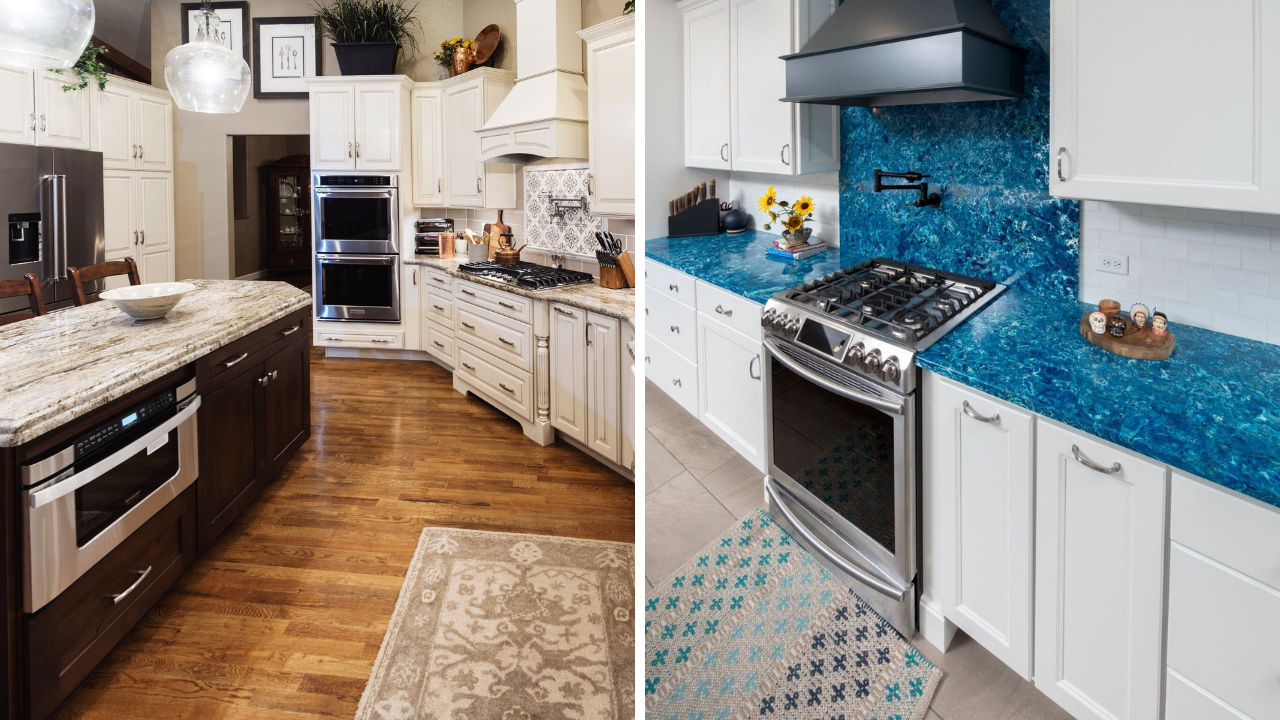
Cabinet and Countertop Installation is one of the most important steps of a kitchen renovation. It not only influences the appearance of the kitchen but also, the durability of the materials. But the thing is, most people don’t really get that picking quartz or granite countertops can alter the installation process itself. Installers these days (2025-2026) are noticing real differences in the planning, cost, and duration of the work depending on the material chosen.
Installation Planning Starts With the Right Cabinet Base
Certainly, one cannot put countertops without first having cabinets. So, cabinet and countertop installation is always sequenced such that the cabinetry is level and solid. Quartz countertops are designed and evenly weighted. For this reason, regular cabinet frames are generally sufficient to support the weight.
On the other hand, granite is heavier and completely natural. Consequently, it is common for the cabinets to be strengthened, particularly in the area of the sink. Industry report for 2025 shows that almost 30% of granite countertop installations involve cabinet modifications before slabs can be safely placed. Hence, a little foresight can go a long way in saving time and avoiding costly double work.
How Quartz Installation Differs From Granite
Facilitating the production process, quartz countertops are manufactured to the highest precision and feature beveled edges. This is what makes the installation portion very quick. In fact, some contractors have revealed that they can finish quartz countertops up to 20-25% faster as compared with granite according to 2026 renovation schedules.
Nonetheless, each granite piece is different not only in terms of thickness but also pattern. For this reason, workers must carry out measurements more meticulously on the spot. Moreover, they must locate seams in such a way that the overall appearance remains harmonious with the natural stone. Consequently, putting in granite is normally more time-consuming and requires higher professional skills.
Nevertheless, a good installation by a competent installer is a must for both materials to prevent scenarios such as cracks, surface irregularities, or cabinet damages.
Cost and Labor Differences Homeowners Should Expect
The prices involved in the installation of quartz and granite countertops differ. For instance, Quartz has a higher price tag on the raw material but labor is less expensive due to the ease of working with it. On the other hand, granite may be cheaper per slab but the extra support work might make the installation more costly.
According to renovation data for 2025 from North America, labor costs account for almost 40% of the total granite countertop expense. Thus, a homeowner would be wise not to isolate the material and installation costs if they are to make a proper financial decision.
Long-Term Impact on Cabinets and Maintenance
Moreover, there is the question of long-term maintenance to consider. Since quartz is non-porous, it does not have to be sealed, thus the cabinets below are at a lower risk of moisture damage. Regular sealing is necessary with granite if you want to maintain its beauty. When sealing becomes infrequent, moisture can gradually interfere with the cabinet’s structural integrity.
This is why nowadays, the cabinet and countertop installation industry considers it a standard to install moisture-control layers and use adhesives with higher bonding strength especially for the kitchens that get a lot of foot traffic.
Choosing between quartz versus granite countertops is about more than appearance. It directly affects how cabinets are installed, supported, and maintained. While quartz offers speed and consistency, granite provides natural beauty with added structural needs. Therefore, understanding these differences helps homeowners make smarter, long-lasting decisions well into 2026 and beyond.